
What Sudenzlase is, Explained: The Truth Behind This Viral Health Term and Why Experts Don’t Recognize It
Is Sudenzlase Real? A Deep Dive into the Truth Behind the Online Buzz


Introduction
In this digital era, we often encounter new and unfamiliar health-related keywords online, and they are often highlighted in blogs, message boards, and social media. One of these is “What Sudenzlase is“. Although Sudenzlase has been mentioned online, it is not recognised by science or medicine. This brings us to the important consideration of what this term is, why it is being discussed,d and how we should approach and interpret this information.
What is Sudenzlase?
We searched through reliable medical and scientific databases and were unable to find any definition or classification of what Sudenzlase is. It is not listed in:
- World Health Organisation (WHO) classification of diseases
- National Institutes of Health (NIH)
- Peer-reviewed medical journals
- Texts on diagnosis (ICD, DSM)
This demonstrates that Sudenzlase is not a medical term. Rather, it seems to be a term coined or misinterpreted online, and not validated by science.
How Did It Get Online?
Occasionally, terms such as Sudenzlase are associated with online content. There are several reasons why:
1. SEO Content Creation
Websites produce large amounts of content to rank for obscure keywords. Sometimes fictitious or misinterpreted terms are employed for search engine optimisation.
2. Incorrect Interpretation of Medical Symptoms
There are instances where websites try to lump together common symptoms like dizziness, fatigue, and weakness to create a diagnosis.
3. Machine-Generated or Unchecked Information
AI content generators can create inaccurate or fabricated health information if they’re not vetted.
4. Social Media Amplification
When a word is published online, it can be republished by other sources, even if it’s not correct.
Sudenzlase Is Not a Medical Condition
To be a valid medical condition, a situation must be:
- Clinical research validation
- Reproducible symptoms
- Peer-reviewed studies
- Classification in medical nomenclature
Sudenzlase falls short on all these points. It has no official cases in clinical practice, and it is not endorsed by any medical societies.
Risks of Misleading Health Terms
The prevalence of terms without a medically accepted definition can lead to:
1. Self-Diagnosis Errors
People might misinterpret normal symptoms as something else and panic unnecessarily.
2. Delayed Medical Treatment
Prioritising incorrect information can lead to delays in the diagnosis of real medical problems.
3. Psychological Stress
Thinking you have a condition that isn’t real can cause confusion or anxiety.
4. Spread of Misinformation
When more people pass on unverified information, it is more difficult to dispel.
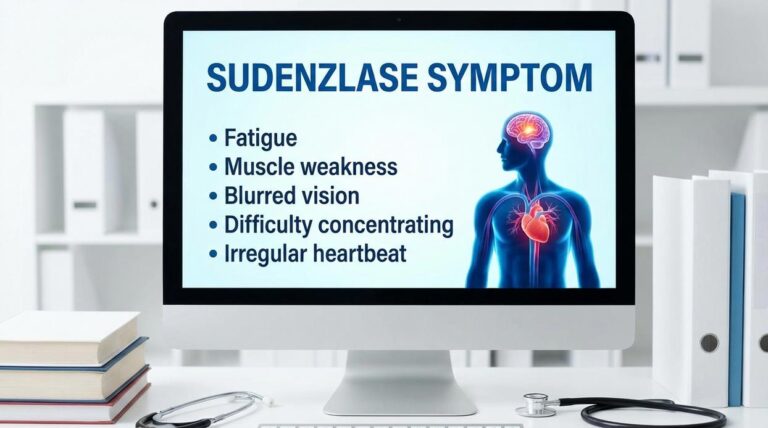
Understanding Symptoms Often Misattributed
Certain websites falsely associate Sudenzlase with common symptoms like:
- Weakness or fatigue
- Headaches
- Digestive discomfort
- Neurological confusion
But these symptoms can be attributable to many real conditions, such as viral infection, nutritional deficiency, stress disorder, or chronic disease. In the absence of a clinical diagnosis, it is medically inaccurate to attribute them to a fictional illness.
Reliable Sources for Medical Information
For correct health information, people should refer to reliable sources, including:
- World Health Organization (WHO)
- Centers for Disease Control and Prevention (CDC)
- National health ministries
- Licensed healthcare professionals
These organisations rely on research, evidence, and clinical testing rather than conjecture and trends.
How to Research Unfamiliar Medical Terms
When coming across unfamiliar medical terms online, try this:
Verify term: Is it listed in medical sources?
Cross-check information: Do sources have credibility?
Don’t be alarmed: Terms and symptoms online may not be real
Ask experts: Doctors and specialists diagnose and treat properly
This minimises confusion and improves health outcomes.
Conclusion
Sudenzlase is not a scientifically proven disease or condition. It’s probably due to misinformation, content manipulation, or confusion about the symptoms of general health. The internet can be a great resource, but it’s also important to separate the reliable sources from the unreliable.


